


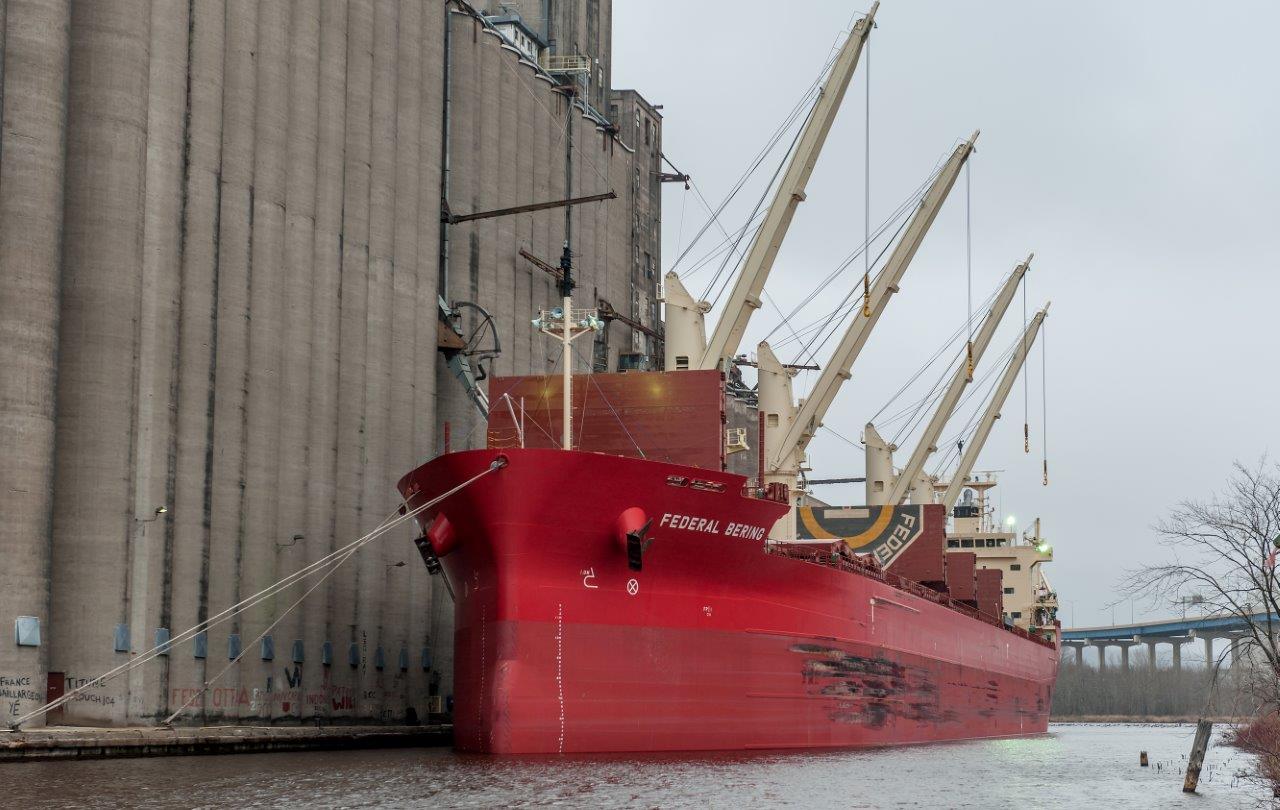
For small businesses in the greater Twin Ports that are at least in part dependent on international trade, 2025 may have been rough sailing.
The Port of Duluth-Superior last week reported cargo shipments measured by tonnage falling nearly 15 percent from the previous year, charting the lowest level since 1938. Canadian trade dropped even further, down 41 percent from 2024.
Fueling much of that decline was President Donald Trump’s tariff trade war, along with overall uncertain market conditions in many business sectors.
News with a little more humanity
WPR’s “Wisconsin Today” newsletter keeps you connected to the state you love without feeling overwhelmed. No paywall. No agenda. No corporate filter.
“Tariffs have affected small businesses,” said Chris Wojtowicz of the Small Business Development Center at the University of Wisconsin-Superior. “The bottom line for all small businesses has been, “How am I going to absorb these costs or pass them on to my customer?”
How exactly can a small business that orders parts from across international borders navigate the economic headwinds? Wojtowicz offers advice on that regularly to small businesses. He shared some of those ideas with WPR’s Robin Washington on “Morning Edition.”
The following interview has been edited for brevity and clarity.
Robin Washington: We spoke with you last spring when the tariff wars had just begun. Now that the year-end numbers are out, let’s get the bad news out of the way. Most of the tonnage shipped from the port of Duluth-Superior is iron ore and grain. How have the trade wars affected local small businesses who aren’t dealing in taconite or soybeans?
Chris Wojtowicz: For the most part, the effects have been adverse. Yet, there are some who have found opportunities in it because they don’t have to work as hard against competition. There are opportunities out there for these small businesses. Sometimes you just need to know where to look.
RW: One place you told us last year to look for an opportunity was foreign trade zones at our ports.
CW: Yes. There’s one right here in Duluth and they’re working on creating a sub-zone in Superior. There are two types. One is called a bonded warehouse, where things sit in the warehouse until you remove them, and you pay your duties and taxes at that time. Because you don’t have to pay those fees up front, you can hold on to that money.
Then there’s a foreign trade zone, where you bring imports into the zone and do your assembly right there. If you’re making a lawn mower and there’s a part you import, the item that’s leaving the free trade zone is a lawnmower, and the duties and taxes are based on that finished product when it leaves the zone. A lot of times that can be zero.
RW: Are there other techniques — and do you have case histories?
CW: One that really comes to mind is a woman who imported product from China. Early on in the tariffs, when they were 150 and 170 percent, she was saying, “Oh my, what am I going to do? I’m going to have to go out of business.”
The strategy that we helped her with was to negotiate with her customer to pay half the tariff because they really wanted her product. She also hadn’t realized that she was only shipping using a 20-foot container. The cost for that is 85 percent the cost of a 40-foot container. I told her, “If you can pay 15 percent more for your transportation charges, you can double your quantity. And that saving offsets any of the tariffs that you’re paying.”
The Chinese tariffs have gone from the triple-digits down to double-digits, which in my personal opinion is still too much. But here’s an example of a small company that was able to double their business by using a savings opportunity that was already out there. All she had to do was look for it.
If you have an idea about something in northern Wisconsin you think we should talk about on Morning Edition — including an opposing view on this subject — send it to us at northern@wpr.org.
link