US trade deals come with defence strings attached
WE HAVE entered a dark era of trade deals, one where Washington now openly links national security to success. If countries want lower tariffs, they have to meet US President Donald Trump’s defence demands.
It’s working. Last week, the White House cut deals with Indonesia, the Philippines and Japan, granting them lower rates than Trump’s threatened tariffs. In exchange, they have had to sign up to vaguely worded commitments on defence and national security.
This is a sharp break from normal statecraft, notes Bob Savic, head of international trade and sanctions consulting at the London-based Global Policy Institute. “The Trump administration has redefined US policy by explicitly tying economic agreements to national security,” he told me.
The White House’s core objective, he adds, is to leverage America’s economic power to protect and advance its strategic interests. Countering China and reshaping global rules in favour of the US are part of that calculation.
The strategy delivers short-term wins, especially against China, but at a long-term cost. It’s eroded trust in American leadership, alienated allies, and accelerated the creation of rival economic blocs.
Chaotic negotiation
The expansion of the Brics group of emerging-market powers is the latest example. Originally created as an alternative to the US-led international order, it has become more appealing in the face of the trade war.
Asian leaders are quietly outraged by the White House’s strong-arm tactics. At a recent gathering of foreign ministers in Kuala Lumpur, without explicitly mentioning the US, Malaysia’s Prime Minister Anwar Ibrahim said the world is now witnessing an era where “power unsettles principle” and “tools once used to generate growth are now wielded to pressure, isolate and contain”.
“This feels like colonialism. We are doing what the US wants – but we hate it.”
—
An Indonesian business owner
As he did with India and Pakistan, Trump also waded into the Thailand-Cambodia clash that has killed dozens and displaced tens of thousands, warning he wouldn’t make a trade deal with either country while the conflict continued. On Monday (Jul 28), the two sides agreed to halt the hostilities and work towards a diplomatic resolution.
The current negotiation process is chaotic and frequently contested, as shown in talks between the US and Japan. On social media, the American president bragged that Tokyo had agreed to buy “billions of dollars’ worth of military and other equipment”.
But Japan’s Chief Cabinet Secretary Yoshimasa Hayashi said additional purchases of American defence equipment aren’t new orders and, instead, would be based on existing procurement policy.
A similarly confusing dynamic emerged with the Philippines. Trump said the two countries would “work together militarily”. Later, the Philippine Ambassador to the US Jose Manuel Romualdez clarified this, saying that discussions were taking place on the establishment of an ammunition plant in Subic Bay, at one time the second-largest American overseas military installation in the world.
The US leader said the project will churn out “more ammo than any country has ever had”. Again, the benefits appear to be mostly tilted in Washington’s favour.
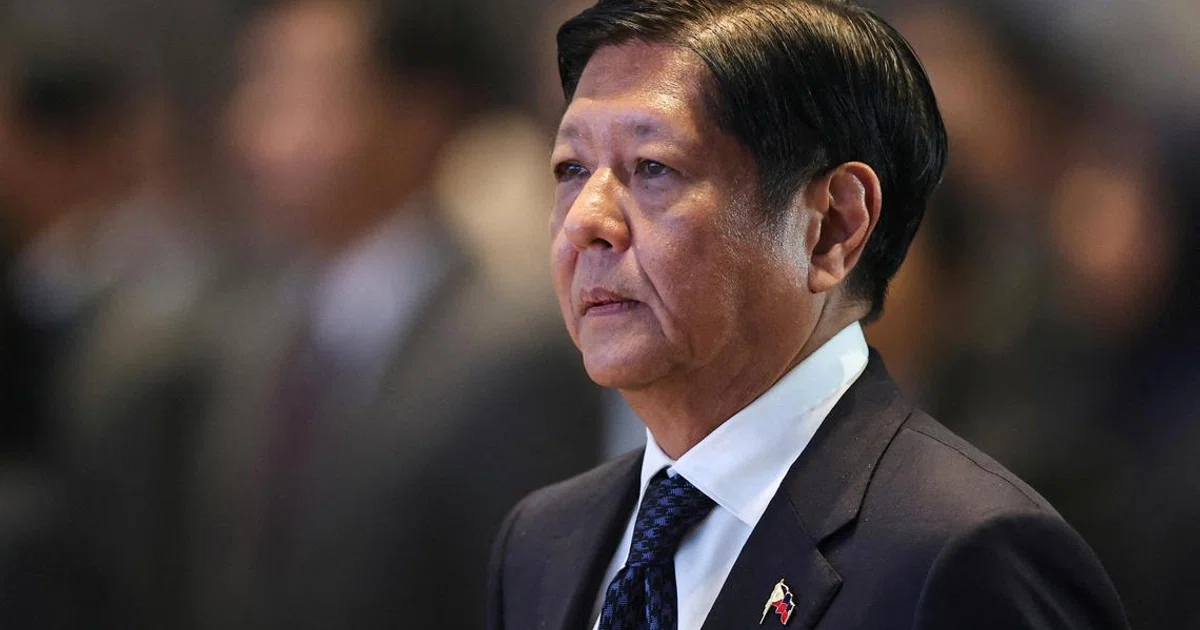
For Manila, this is a stark reversal from its decision to remove US forces from Subic in 1992. Domestic public opinion is unlikely to be kind to President Ferdinand Marcos Jr, whose government is trying to sell it as a win, despite concerns over antagonising China.
Replacing the American consumer
Indonesia’s deal touched on national security, too, with both sides agreeing to strengthen supply chains and counter “unfair trade practices” – shorthand for China. And while Vietnam is yet to officially confirm the terms of its agreement (although Trump has already announced his version), a document seen by Bloomberg News highlights how much of US tariff policy appears aimed at reining in Beijing.
The model for this appears to be the US-UK agreement, signed in May, the first of Trump’s promised deals. It included strict security requirements for Britain’s steel and pharmaceuticals industries, ostensibly to keep China out.
In contrast, the UK-India trade deal signed last week was business as usual, eliminating tariffs on products ranging from cars to alcohol.
Asian countries may be falling in line for now, but they are weighing up other options. The US is a major source of foreign direct investment in the 10-member Asean bloc, with more than 6,000 companies in the region.
But trade flows between China and Asean have also grown in the last 15 years, with each becoming the other’s largest partner. Trade ties with Japan, South Korea and India are all growing strongly too.
Replacing the American consumer is difficult, but countries are adapting. They’re selectively aligning with US national security priorities in areas such as semiconductors and critical minerals, while trying to maintain their self-interest where possible. As one Indonesian business owner said to me: “This feels like colonialism. We are doing what the US wants – but we hate it.”
The world is unlikely to return to the old model of trade divorced from geopolitics. “This is no passing storm,” Malaysia’s Anwar has said. “It is the new weather of our time.” We all have to adapt to this changing climate – and the coming tempests that accompany it. BLOOMBERG
link